

GET TO KNOW LONG BEACH
Long Beach has grown through generations of innovation, shaped by the first three industrial revolutions that transformed its waterfront, neighborhoods, and local commerce. Early port development and transportation advances connected the city to regional and global trade, helping establish a strong economic foundation that fueled growth. Over time, suburban expansion, evolving retail districts, maritime industry, and expanding infrastructure reshaped everyday life while reinforcing a strong sense of community identity and local pride.
Each era introduced new technologies that changed how people worked, traveled, and connected, yet the spirit of Main Street remained rooted in neighborhood relationships and shared opportunity. From industrial growth to the digital transformation of recent decades, Long Beach repeatedly adapted while preserving the values that made the city unique. This long history of resilience now supports the next chapter of innovation and community imagination.
At Los Angeles Smart Cities Technology Stations, visitors can explore Long Beach’s story through immersive experiences powered by virtual reality, augmented reality navigation, interactive robots, and delivery robots. Guided by Breezy AI, guests experience history in ways that feel interactive and personal, connecting past achievements to future possibilities. Together, these experiences show how Long Beach’s innovation journey continues forward, helping shape a new vision for the future of Main Street.

Long Beach 2.0 Online Course
Long Beach 2.0 VR History World
Long Beach 2.0 Online Course
At Los Angeles 4.0, our mission is to provide our customers with the best travel experience possible. We strive to make every trip unforgettable by offering exceptional service and
Long Beach 3.0 Online Course
Long Beach 2.0 VR History World
Long Beach 2.0 Online Course
Los Angeles 4.0 was founded in 2010 by John Smith, who had a passion for travel and a desire to share it with others. Since then, we have grown to become one of the leading travel companies in the
Long Beach 2.0 VR History World
Long Beach 2.0 VR History World
Long Beach 2.0 VR History World
Our team at Los Angeles 4.0 is made up of experienced travel professionals who are dedicated to helping our customers create unforgettable memories. We have specialists in every area
Long Beach 3.0 VR History World
Long Beach 2.0 VR History World
Long Beach 2.0 VR History World
At Los Angeles 4.0, we work with some of the top travel companies in the world to bring our customers the best deals and experiences. We have partnerships with leading airlines, hotels, and
THE RISE OF A CITY
Long Beach’s family and social life strengthened during the Second Industrial Revolution, as new technologies helped drive the city’s growth between 1870 and 1914. Transportation advances, including rail connections and improved roads, made the coastal area more accessible and encouraged families to settle permanently. Increased mobility allowed residents to maintain social ties, access employment, and participate in regional activities, supporting the formation of stable neighborhoods.
Electricity brought important changes to everyday life. Electric lighting improved safety, extended evening hours, and supported social gatherings in homes, streets, and public spaces. Community life became more active, creating opportunities for connection and shared experiences.
Modern utilities, such as clean water and sanitation systems, have improved public health and reduced disease, making Long Beach a safer and more desirable place for families. These improvements supported population growth and long-term settlement.
Communication technologies, including the telephone, strengthened connections among families, neighbors, and civic groups. Faster communication encouraged coordination, civic participation, and mutual support.
These innovations improved the quality of life and helped establish a strong sense of community. By supporting family stability and social connection, new technologies played a key role in Long Beach’s transition from a small coastal settlement into a growing and resilient city.
WHAT SNATA MONICA LEFT BEHIND
Long Beach’s family and social life strengthened during the Second Industrial Revolution, as new technologies helped drive the city’s growth between 1870 and 1914. Transportation advances, including rail connections and improved roads, made the coastal area more accessible and encouraged families to settle permanently. Increased mobility allowed residents to maintain social ties, access employment, and participate in regional activities, supporting the formation of stable neighborhoods.
Electricity brought important changes to everyday life. Electric lighting improved safety, extended evening hours, and supported social gatherings in homes, streets, and public spaces. Community life became more active, creating opportunities for connection and shared experiences.
Modern utilities, such as clean water and sanitation systems, have improved public health and reduced disease, making Long Beach a safer and more desirable place for families. These improvements supported population growth and long-term settlement.
Communication technologies, including the telephone, strengthened connections among families, neighbors, and civic groups. Faster communication encouraged coordination, civic participation, and mutual support.
These innovations improved the quality of life and helped establish a strong sense of community. By supporting family stability and social connection, new technologies played a key role in Long Beach’s transition from a small coastal settlement into a growing and resilient city.
SANTA MOINCA MOVED FORWARD
Long Beach’s family and social life strengthened during the Second Industrial Revolution, as new technologies helped drive the city’s growth between 1870 and 1914. Transportation advances, including rail connections and improved roads, made the coastal area more accessible and encouraged families to settle permanently. Increased mobility allowed residents to maintain social ties, access employment, and participate in regional activities, supporting the formation of stable neighborhoods.
Electricity brought important changes to everyday life. Electric lighting improved safety, extended evening hours, and supported social gatherings in homes, streets, and public spaces. Community life became more active, creating opportunities for connection and shared experiences.
Modern utilities, such as clean water and sanitation systems, have improved public health and reduced disease, making Long Beach a safer and more desirable place for families. These improvements supported population growth and long-term settlement.
Communication technologies, including the telephone, strengthened connections among families, neighbors, and civic groups. Faster communication encouraged coordination, civic participation, and mutual support.
These innovations improved the quality of life and helped establish a strong sense of community. By supporting family stability and social connection, new technologies played a key role in Long Beach’s transition from a small coastal settlement into a growing and resilient city.
Long Beach 2.0 Online Course
Long Beach 2.0 Breezy AI Campaign
Long Beach 2.0 Online Course
At Los Angeles 4.0, our mission is to provide our customers with the best travel experience possible. We strive to make every trip unforgettable by offering exceptional service and
Long Beach 2.0 Online Course
Long Beach 2.0 Breezy AI Campaign
Long Beach 2.0 Online Course
Los Angeles 4.0 was founded in 2010 by John Smith, who had a passion for travel and a desire to share it with others. Since then, we have grown to become one of the leading travel companies in the
Long Beach 2.0 Breezy AI Campaign
Long Beach 2.0 Breezy AI Campaign
Long Beach 2.0 Breezy AI Campaign
Our team at Los Angeles 4.0 is made up of experienced travel professionals who are dedicated to helping our customers create unforgettable memories. We have specialists in every area
Main Street Innovators Podcast
Long Beach 2.0 Breezy AI Campaign
Long Beach 2.0 Breezy AI Campaign
At Los Angeles 4.0, we work with some of the top travel companies in the world to bring our customers the best deals and experiences. We have partnerships with leading airlines, hotels, and
Main Street Innovators Podcast
Main Street Innovators Podcast
Main Street Innovators Podcast
At Los Angeles 4.0, we work with some of the top travel companies in the world to bring our customers the best deals and experiences. We have partnerships with leading airlines, hotels, and
Main Street Innovators Podcast
Main Street Innovators Podcast
Main Street Innovators Podcast
At Los Angeles 4.0, we work with some of the top travel companies in the world to bring our customers the best deals and experiences. We have partnerships with leading airlines, hotels, and
Main Street Innovators Podcast
Main Street Innovators Podcast
Main Street Innovators Podcast
At Los Angeles 4.0, we work with some of the top travel companies in the world to bring our customers the best deals and experiences. We have partnerships with leading airlines, hotels, and
Main Street Innovators Podcast
Main Street Innovators Podcast
Main Street Innovators Podcast
At Los Angeles 4.0, we work with some of the top travel companies in the world to bring our customers the best deals and experiences. We have partnerships with leading airlines, hotels, and
Main Street Innovators Podcast
Main Street Innovators Podcast
Main Street Innovators Podcast
At Los Angeles 4.0, we work with some of the top travel companies in the world to bring our customers the best deals and experiences. We have partnerships with leading airlines, hotels, and
Main Street Innovators Podcast
Main Street Innovators Podcast
Main Street Innovators Podcast
At Los Angeles 4.0, we work with some of the top travel companies in the world to bring our customers the best deals and experiences. We have partnerships with leading airlines, hotels, and
Main Street Innovators Podcast
Main Street Innovators Podcast
Main Street Innovators Podcast
At Los Angeles 4.0, we work with some of the top travel companies in the world to bring our customers the best deals and experiences. We have partnerships with leading airlines, hotels, and
Main Street Innovators Podcast
Main Street Innovators Podcast
Main Street Innovators Podcast
At Los Angeles 4.0, we work with some of the top travel companies in the world to bring our customers the best deals and experiences. We have partnerships with leading airlines, hotels, and
THE RISE OF SUBURBIA
Long Beach’s family and social life were positively transformed during the Third Industrial Revolution as new technologies supported growth and suburban development from 1950 to 2024. Postwar planning and modern construction created stable neighborhoods centered on families, schools, parks, and shared public spaces. Advances in home design, appliances, and utilities reduced daily labor and improved comfort, allowing families more time together.
Transportation innovation played a major role in shaping social life. Widespread car ownership and expanded road networks improved mobility, enabling families to access employment, education, recreation, and regional activities while maintaining neighborhood connections. Community life expanded beyond local boundaries while remaining rooted in suburban stability.
Communication technologies such as telephones, television, and later personal computers shaped shared family routines and cultural experiences within the home. As digital technology advanced, the internet and mobile devices increased access to information, education, and social connections.
Public investments in healthcare, safety, and community facilities further improved the quality of life. Together, these innovations strengthened family bonds, fostered social mobility, and encouraged active community participation. By embracing new technology while preserving neighborhood character, Long Beach evolved into a thriving suburban city with resilient social networks and a strong sense of community.
WHAT SANTA MONICA LEFT BEHIND
Long Beach’s family and social life were positively transformed during the Third Industrial Revolution as new technologies supported growth and suburban development from 1950 to 2024. Postwar planning and modern construction created stable neighborhoods centered on families, schools, parks, and shared public spaces. Advances in home design, appliances, and utilities reduced daily labor and improved comfort, allowing families more time together.
Transportation innovation played a major role in shaping social life. Widespread car ownership and expanded road networks improved mobility, enabling families to access employment, education, recreation, and regional activities while maintaining neighborhood connections. Community life expanded beyond local boundaries while remaining rooted in suburban stability.
Communication technologies such as telephones, television, and later personal computers shaped shared family routines and cultural experiences within the home. As digital technology advanced, the internet and mobile devices increased access to information, education, and social connections.
Public investments in healthcare, safety, and community facilities further improved the quality of life. Together, these innovations strengthened family bonds, fostered social mobility, and encouraged active community participation. By embracing new technology while preserving neighborhood character, Long Beach evolved into a thriving suburban city with resilient social networks and a strong sense of community.
SANTA MONICA MOVED FORWARD
Long Beach’s family and social life were positively transformed during the Third Industrial Revolution as new technologies supported growth and suburban development from 1950 to 2024. Postwar planning and modern construction created stable neighborhoods centered on families, schools, parks, and shared public spaces. Advances in home design, appliances, and utilities reduced daily labor and improved comfort, allowing families more time together.
Transportation innovation played a major role in shaping social life. Widespread car ownership and expanded road networks improved mobility, enabling families to access employment, education, recreation, and regional activities while maintaining neighborhood connections. Community life expanded beyond local boundaries while remaining rooted in suburban stability.
Communication technologies such as telephones, television, and later personal computers shaped shared family routines and cultural experiences within the home. As digital technology advanced, the internet and mobile devices increased access to information, education, and social connections.
Public investments in healthcare, safety, and community facilities further improved the quality of life. Together, these innovations strengthened family bonds, fostered social mobility, and encouraged active community participation. By embracing new technology while preserving neighborhood character, Long Beach evolved into a thriving suburban city with resilient social networks and a strong sense of community.
Long Beach 3.0 Online Course
Long Beach 3.0 Breezy AI Campaign
Long Beach 3.0 Online Course
At Los Angeles 4.0, our mission is to provide our customers with the best travel experience possible. We strive to make every trip unforgettable by offering exceptional service and
Long Beach 3.0 VR World
Long Beach 3.0 Breezy AI Campaign
Long Beach 3.0 Online Course
Los Angeles 4.0 was founded in 2010 by John Smith, who had a passion for travel and a desire to share it with others. Since then, we have grown to become one of the leading travel companies in the
Long Beach 3.0 Breezy AI Campaign
Long Beach 3.0 Breezy AI Campaign
Long Beach 3.0 Breezy AI Campaign
Our team at Los Angeles 4.0 is made up of experienced travel professionals who are dedicated to helping our customers create unforgettable memories. We have specialists in every area
Long Beach 3.0 Breezy AI Campaign
Long Beach 3.0 Breezy AI Campaign
Long Beach 3.0 Breezy AI Campaign
Our team at Los Angeles 4.0 is made up of experienced travel professionals who are dedicated to helping our customers create unforgettable memories. We have specialists in every area
Long Beach 3.0 Breezy AI Campaign
Long Beach 3.0 Breezy AI Campaign
Long Beach 3.0 Breezy AI Campaign
Our team at Los Angeles 4.0 is made up of experienced travel professionals who are dedicated to helping our customers create unforgettable memories. We have specialists in every area
Main Street Innovators Podcast
Long Beach 3.0 Breezy AI Campaign
Long Beach 3.0 Breezy AI Campaign
At Los Angeles 4.0, we work with some of the top travel companies in the world to bring our customers the best deals and experiences. We have partnerships with leading airlines, hotels, and
Main Street Innovators Podcast
Long Beach 3.0 Breezy AI Campaign
Main Street Innovators Podcast
At Los Angeles 4.0, we work with some of the top travel companies in the world to bring our customers the best deals and experiences. We have partnerships with leading airlines, hotels, and
Main Street Innovators Podcast
Long Beach 3.0 Breezy AI Campaign
Main Street Innovators Podcast
At Los Angeles 4.0, we work with some of the top travel companies in the world to bring our customers the best deals and experiences. We have partnerships with leading airlines, hotels, and
Main Street Innovators Podcast
Main Street Innovators Podcast
Main Street Innovators Podcast
At Los Angeles 4.0, we work with some of the top travel companies in the world to bring our customers the best deals and experiences. We have partnerships with leading airlines, hotels, and
Main Street Innovators Podcast
Main Street Innovators Podcast
Main Street Innovators Podcast
At Los Angeles 4.0, we work with some of the top travel companies in the world to bring our customers the best deals and experiences. We have partnerships with leading airlines, hotels, and
Main Street Innovators Podcast
Main Street Innovators Podcast
Main Street Innovators Podcast
At Los Angeles 4.0, we work with some of the top travel companies in the world to bring our customers the best deals and experiences. We have partnerships with leading airlines, hotels, and
Main Street Innovators Podcast
Main Street Innovators Podcast
Main Street Innovators Podcast
At Los Angeles 4.0, we work with some of the top travel companies in the world to bring our customers the best deals and experiences. We have partnerships with leading airlines, hotels, and

LONG BEACH FALLEN HEROES VR WORLD
Meet {founder_name}, the founder of Los Angeles 4.0. With over 20 years of experience in the travel industry, {founder_name} has a deep passion for creating memorable travel experiences for customers.
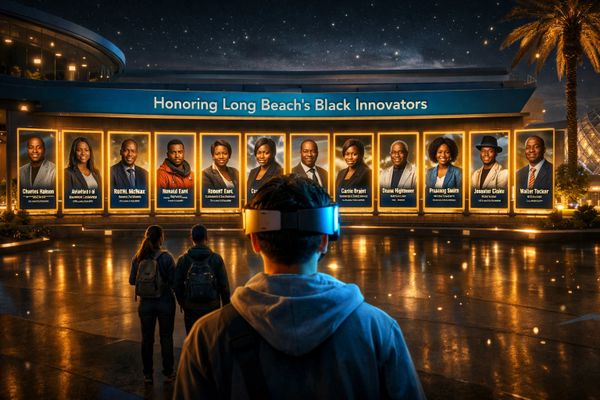
LONG BEACH BLACK INNOVATORS VR WORLD
Our team of travel experts is made up of experienced professionals who are dedicated to helping you plan your dream vacation. With extensive knowledge of destinations around the world, our travel experts will help you cr
REPEATING HISTORY
Long Beach has built strong foundations for the future by consistently adapting to innovation across the first three industrial revolutions. During the First Industrial Revolution, early development centered on maritime trade, coastal access, and regional exchange, establishing Long Beach as a gateway for commerce and connection. These early patterns encouraged growth rooted in adaptability and opportunity.
The Second Industrial Revolution introduced transformative infrastructure and industry. Rail connections, port expansion, electricity, and modern communication systems reshaped Long Beach into a major transportation and manufacturing center. These advances created jobs, attracted long-term investment, and supported the growth of neighborhoods and civic institutions.
The Third Industrial Revolution accelerated change through global trade, suburban development, and digital technology. Highways, containerization, computers, and the internet transformed logistics, business operations, and workforce skills. Long Beach diversified its economy while strengthening its role in global supply chains.
These three eras fostered resilience, innovation, and long-term vision. By embracing new technology while preserving its identity as a working port city, Long Beach developed the infrastructure, experience, and mindset needed to confidently prepare for future innovation and continued growth.
RETHINKING SANTA MONICA... AGAIN
Long Beach has built strong foundations for the future by consistently adapting to innovation across the first three industrial revolutions. During the First Industrial Revolution, early development centered on maritime trade, coastal access, and regional exchange, establishing Long Beach as a gateway for commerce and connection. These early patterns encouraged growth rooted in adaptability and opportunity.
The Second Industrial Revolution introduced transformative infrastructure and industry. Rail connections, port expansion, electricity, and modern communication systems reshaped Long Beach into a major transportation and manufacturing center. These advances created jobs, attracted long-term investment, and supported the growth of neighborhoods and civic institutions.
The Third Industrial Revolution accelerated change through global trade, suburban development, and digital technology. Highways, containerization, computers, and the internet transformed logistics, business operations, and workforce skills. Long Beach diversified its economy while strengthening its role in global supply chains.
These three eras fostered resilience, innovation, and long-term vision. By embracing new technology while preserving its identity as a working port city, Long Beach developed the infrastructure, experience, and mindset needed to confidently prepare for future innovation and continued growth.
San Diego Smart City Technology Stations
San Diego Smart City Technology Stations
San Diego Smart City Technology Stations
At Los Angeles 4.0, our mission is to provide our customers with the best travel experience possible. We strive to make every trip unforgettable by offering exceptional service and
Lemon Grove VR For Business World
San Diego Smart City Technology Stations
San Diego Smart City Technology Stations
Los Angeles 4.0 was founded in 2010 by John Smith, who had a passion for travel and a desire to share it with others. Since then, we have grown to become one of the leading travel companies in the
Breezy AI Restaurant Campaigns
San Diego Smart City Technology Stations
Breezy AI Restaurant Campaigns
Our team at Los Angeles 4.0 is made up of experienced travel professionals who are dedicated to helping our customers create unforgettable memories. We have specialists in every area
Breezy AI Retail Campaigns
San Diego Smart City Technology Stations
Breezy AI Restaurant Campaigns
At Los Angeles 4.0, we work with some of the top travel companies in the world to bring our customers the best deals and experiences. We have partnerships with leading airlines, hotels, and
Breezy AI Hotels Campaigns
Support for Deaf and Hard of Hearing
Support for Physical Disabilities
At Los Angeles 4.0, we work with some of the top travel companies in the world to bring our customers the best deals and experiences. We have partnerships with leading airlines, hotels, and
Support for Physical Disabilities
Support for Deaf and Hard of Hearing
Support for Physical Disabilities
At Los Angeles 4.0, we work with some of the top travel companies in the world to bring our customers the best deals and experiences. We have partnerships with leading airlines, hotels, and
Support for Deaf and Hard of Hearing
Support for Deaf and Hard of Hearing
Support for Deaf and Hard of Hearing
At Los Angeles 4.0, we work with some of the top travel companies in the world to bring our customers the best deals and experiences. We have partnerships with leading airlines, hotels, and
Interactive Robotic Assistants
Support for Deaf and Hard of Hearing
Support for Deaf and Hard of Hearing
At Los Angeles 4.0, we work with some of the top travel companies in the world to bring our customers the best deals and experiences. We have partnerships with leading airlines, hotels, and
In-Store/Restaurant Delivery Robots
In-Store/Restaurant Delivery Robots
In-Store/Restaurant Delivery Robots
At Los Angeles 4.0, we work with some of the top travel companies in the world to bring our customers the best deals and experiences. We have partnerships with leading airlines, hotels, and
Outdoor Delivery Robots
In-Store/Restaurant Delivery Robots
In-Store/Restaurant Delivery Robots
At Los Angeles 4.0, we work with some of the top travel companies in the world to bring our customers the best deals and experiences. We have partnerships with leading airlines, hotels, and
Product and Food Delivery Drones
In-Store/Restaurant Delivery Robots
Product and Food Delivery Drones
At Los Angeles 4.0, we work with some of the top travel companies in the world to bring our customers the best deals and experiences. We have partnerships with leading airlines, hotels, and
Main Street Innovators Podcast
In-Store/Restaurant Delivery Robots
Product and Food Delivery Drones
At Los Angeles 4.0, we work with some of the top travel companies in the world to bring our customers the best deals and experiences. We have partnerships with leading airlines, hotels, and